What's next for PSIM? Introducing the Intelligent Converged Management Solution (ICMS)
In control rooms, safeguarding the UK's critical national infrastructure, across utility estates, airports, data centres etc, every second counts. Operators are bombarded with data from disconnected systems, many built on legacy technology never designed to talk to one another. The result is structural vulnerability: siloed interfaces that slow response times and widen the gap threat actors can exploit. Whether it's a coordinated protest, a physical breach, or a cyber-physical attack, time spent switching screens is a second added to your exposure.
For years, Physical Security Information Management (PSIM) systems served as the standard framework for system integration. However, as threats evolve to span both physical environments and Operational Technology (OT), the industry requires a significant paradigm shift. The traditional model of bolting disparate systems together via simple plugins is no longer sufficient to guarantee absolute security. In response, ISM has evolved the PSIM in developing the Intelligent Converged Management Solutions concept, or ICMS.
The Next Generation of Security Integration
For some, PSIM systems represent high cost of ownership, high development costs, and systems that are not easy to work with. However, we are entering a new era, both technically and commercially.
At ISM, we believe the natural progression of the security management platform lies in the transition toward Intelligent Converged Management Solutions (ICMS). An ICMS fundamentally redefines your situational awareness by moving beyond passive video monitoring or basic alarm aggregation into a unified, predictive ecosystem.
Crucially, an ICMS is developed as one cohesive suite, rather than a collection of bolt-on integrations, delivering a complete operational picture across the entire estate.
While PSIM systems integrate security systems, an ICMS does much more, integrating security, safety, incident management, building management, database, Scada, Cyber Security and many other systems into one unified cyber-secured platform.
This security convergence means ICMS provides automations and predefined workflows, such as invacuating, evacuation, lockdown or escalation based on external events, alarms or manual triggers.
Furthermore, ICMS also performs cyber-physical monitoring, alerting operations centres when suspicious network activity is detected on IoT security devices, preventing silent compromise of cameras, sensors or access control endpoints. It works with Cyber Security systems to provide alerts of suspicious log ins; the workflows direct the operators how to respond to these threats quickly and effectively.
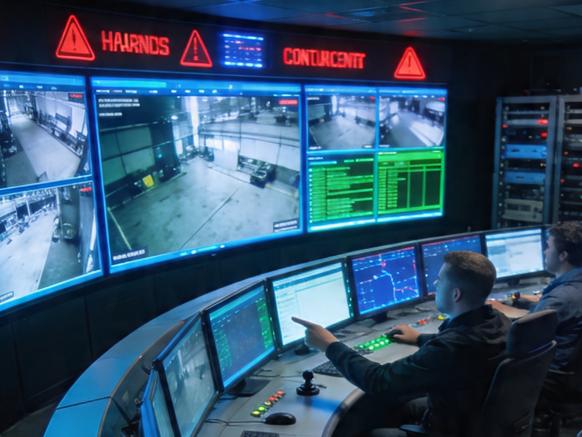
The result is a 'single pane of glass' front-end that unifies physical, operational and cyber intelligence into one assured command and control environment.
What can an ICMS Deliver?
An ICMS builds on the PSIM concept, serving as an integration platform that delivers command and control over hardware and software solutions, both on-premises and bridging to the cloud.
This convergence of systems collates information to deliver proof of compliance and allows operators to effectively manage security response, while providing post-incident analysis.
It is a rules-based solution that allows complex cause and effect to be triggered and managed during ongoing events set against the standard operating procedures provided by the end users.
Automating Security Response
This rules-based system is important for effectively managing security incidents. Some decisions need to be removed from the operator for effective response, such as locking down a reception or wing in a prison in response to an incident.
Similarly, automated responses are required to quickly and effectively protect against cyber-physical threats. If the IT system detects a suspicious log-in anomaly, such as an employee's credentials being used to log in remotely from another country, but their physical keycard was just swiped at the local UK office, the system recognises the cyber-physical conflict.
The ICMS can then automatically execute a predefined response, such as instantly revoking the user's physical access badge, locking down high-security areas (like server rooms), and automatically bringing up the CCTV camera feed of the employee's last known physical location in the security operations centre to verify the person’s identity in real-time.
Supporting health and safety
Meanwhile, AI-based analytics built into an ICMS can support health and safety issues. AI-based video analytics connected to CCTV can continuously monitor escalators for health and safety anomalies, such as on escalators in airport terminals or venues and stadia. This can include:
- Automatically detect a customer falling
- Dangerous overcrowding at the top or bottom landings
- Luggage or other items blocking the steps
These hazards can automatically trigger a multi-system response, such as halting the escalator, dispatching staff, and keeping the operations centre team abreast of the situation.
Enhancing customer service
The ICMS system can also expand to customer service applications. Video Content Analytics (VCA) can automatically monitor queue lengths to detect chokepoints, such as reaching a threshold of more than 50 people waiting in line and triggering an alert. The operations team can then be notified to open additional lanes or deploy customer service staff to attend and provide queue management.
Similarly, the system can be programmed to monitor baggage claim areas. It can detect if a crowd is dangerously bottlenecking around a single carousel, or flag if an unclaimed piece of luggage has been circling the belt for an extended period. The system can then alert ground staff to assist passengers, clear the baggage, or investigate a potential lost luggage issue before passengers even need to ask for help.
Bridging Cloud and On-Premises
At ISM, development never stands still. We are constantly expanding the Genesys platform with new feature sets and system drivers to ensure our users stay ahead of emerging threats. A key part of this is cloud integration, which increasingly is a requirement for our clients.
However, transitioning complex, multi-site environments to the cloud shouldn't mean compromising on operational control or expensive replacement projects. We see the future of Genesys as the ultimate bridge between your existing on-premise infrastructure and modern cloud services.
Genesys is in a unique position to natively integrate both on-premise legacy hardware and new cloud systems. It consolidates these disparate systems into a single pane of glass, displaying them side-by-side uniformly and eliminating the "data overload" that operators frequently face.
This interoperability allows you to execute a safe, calm migration of your campus to the cloud at your own pace. Genesys provides the pragmatic, stop-gap control needed to maintain continuous "sleep-at-night" security while you transition.
To support this flexibility, we offer a cloud-hosted version of Genesys, and our platform can be seamlessly client-hosted on platforms like Azure or AWS.
At ISM, we hold a "last one out shuts the door" mentality. Because our platform is the critical bridge connecting your physical and digital environments, we provide the ultimate backstop for your security operations. Ensuring your system's reliability and uptime never waver during the journey towards full cloud adoption.
The Importance of Cyber Assurance and CAPSS
Physical security devices are inherently connected to networks, making them potential targets for cyber threats. If a physical security platform is compromised, the entire operational network becomes vulnerable. Therefore, selecting a platform backed by verified, government-grade certification is absolutely essential.
The Cyber Assurance for Physical Security Systems (CAPSS) standard, developed by the UK’s National Protective Security Authority (NPSA), sets the baseline for software resilience in high-risk environments. It is a testing and certification standard designed to ensure that IP-networked physical security hardware and software are resilient against cyber-attacks.
CAPSS assurance means that a security product's cyber-attack mitigations are independently assured against a set of security characteristics covering a variety of potential cyber-attack threats. The standard is coupled with assurance of a manufacturer's development and build processes, to ensure cyber defence is a key building block in the product’s DNA. Products that pass CAPSS evaluations, such as Genesys by ISM, are awarded the NPSA CAPSS Trademark.
At ISM, we test all facets of the security solution, including access management, perimeter intrusion, building management and more. Testing core elements not just peripheral systems is essential to ensure that the complete system is CAPSS assured, not just the software, which is especially important for ICMS solutions.
What does this mean for security operations centres and security leaders? Choosing a platform with CAPSS approval ensures that your integration hub is rigorously hardened against sophisticated cyber-attacks. This level of comprehensive assurance protects your data, ensures continuous uptime, and satisfies the strict compliance demands of modern critical infrastructure.
Conclusion
The transition from traditional PSIM to an Intelligent Converged Management Solution (ICMS) is essential for organisations looking to future-proof their security operations. By unifying physical, operational, and cyber intelligence into one assured, CAPSS-certified command centre, you can reduce risk, streamline responses, and bridge the gap between legacy on-premise hardware and modern cloud services. As threats evolve, having a resilient, intelligent partner is key to maintaining operational uptime and protecting your critical assets.
Are you ready to elevate your security infrastructure with a truly converged solution? Get in touch with the team at ISM today to discuss how Genesys can transform your operations.