How Unified Security Platforms enable Faster Incident Response
When security teams treat physical assets and digital infrastructure as separate entities, live security incidents can quickly devolve into a chaotic race against the clock. You cannot afford to let operational delays, siloed data, or fragmented interfaces slow down your response when high-stakes environments such as airports, data centres, and critical utilities are on the line.
A key tool for fast incident response is to use the latest generation of unified security platform, or what we prefer to call an ICMS (Intelligent Converged Management Solution), to unify a wide range of security sensors and other assets into a single view and run automated security workflows. Learn how in this guide.
Shifting from fragmented monitoring to rapid containment
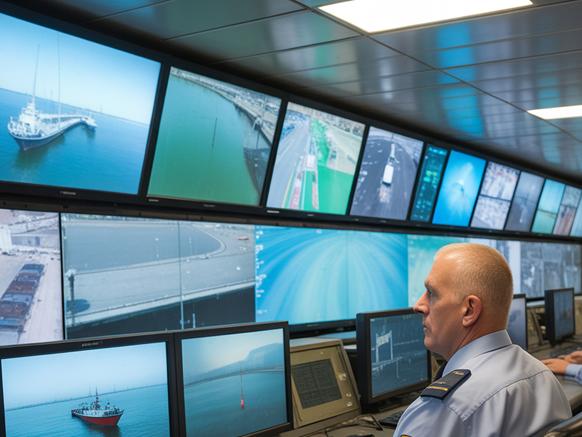
Traditional security control rooms tend to rely on disparate monitoring tools and systems, each existing within their own siloed interface or screen. Treating physical systems and digital infrastructure as separate entities creates critical delays during live incidents, or at worse, allow security threats to go undetected.
The key issue is that the security room operator needs to work across multiple disparate systems, manually reviewing the status of one set of sensors and actioning a response on another device. This sensor overload forces staff to toggle between platforms, creating precious seconds of delay during an active incident.
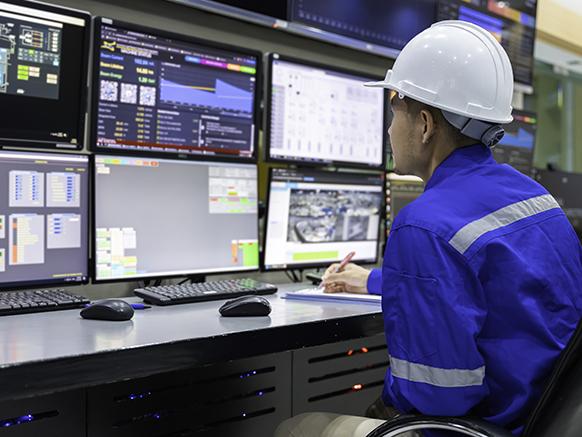
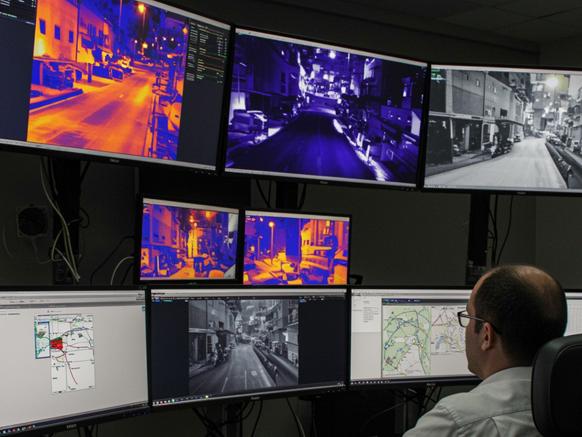
This scenario looks very different when control rooms are fitted out with an Intelligent Converged Management System. This latest breed of unified security platform consolidates security devices and sensors into a single pane of glass, automatically synthesising data across disparate environments and allows for automated workflows, relieving pressure and decision fatigue on operators.
Streamlining the control room when every second counts
When a perimeter breach, activist disruption, or complex insider threat occurs, operator cognitive fatigue poses a massive risk. A unified security platform transforms raw, overwhelming telemetry into clear standard operating procedures.
Consider the benefits of linking multiple security systems together so they can work together automatically. For example, if your ICMS picked up an abnormal out-of-hours server login on site. The system could detect the login, automatically trigger door access restrictions to the room, isolate the machine and alert nearby staff to investigate. This automation provides crucial seconds for staff to respond and confirm if the person at the computer is authorised to access the machine and contain a potential cyber-physical breach.
The benefits extend beyond security, with security operation centres often tasked with ensuring the safety of staff and customers on site. Airports offer a clear example. Video Analytics can detect a build up of customers in a given area, which can be overlaid with door sensor data to provide operators with situational awareness. This data could then trigger an escalator to stop or an entry door to shut to prevent dangerous overcrowding while the existing customers disperse, or automatically trigger staff to attend the scene via Mass Notification System alerts.
Facilitating a cost-effective upgrade path
Crucially, adopting an ICMS platform like Genesys does not necessitate costly replacement of legacy security hardware with new models. That’s because our platform follows a “maintain-in-place” upgrade philosophy, integrating legacy security hardware from a vast range of vendors, adding automations and other modern functionality while helping our clients to make the most of their CapEx budgets.
Eradicating the cyber-physical gap in critical infrastructure
Most security professionals are familiar with Video Management Systems (VMS), which are centralised software platforms that collect, record, store and analyse footage from security cameras.
Many ISM clients approach us after using a VMS, which frequently claim to offer complete integration with other security systems, but tend to fall short. Digging beneath the surface, these systems remain fundamentally video-centric platforms, and often, the integration is provided via third-party plugins, instead of being engineered from the ground up to be a vendor-agnostic integrated solution.
The result can be a lack of reliability, only partial automation and integration with disparate security systems, or lack of accreditation to stringent security standards.
Instead, we believe achieving total security resilience requires an open architecture that integrates devices from multiple vendors and meets rigorous government cybersecurity frameworks. As a CAPSS-approved platform, Genesys provides the trusted "government stamp of approval" required for high-risk estates such as in Critical National Infrastructure. By applying cybersecurity principles from standards and frameworks such as ISO/IEC 27001 and NIST SP 800-82 to the integration of physical security IoT devices, a PSIM/ICMS can reduce the risk of compromised sensors and connected devices being used as attack paths into wider corporate or operational networks.
The cyber-assured foundation for total resilience
Navigating the modern threat landscape requires a fundamental shift from reactive, piecemeal monitoring to proactive operational control. When Critical National Infrastructure assets or customer safety is on the line, bridging the gap between physical security IoT hardware and cyber infrastructure is no longer an operational advantage, it is the bedrock of total organisational resilience.
By deploying a true, CAPSS-approved Intelligent Converged Management System (ICMS) like Genesys, control room teams eliminate data overload and replace fragmented interfaces with a converged system displaying all data on a single pane of glass.
Ready to find out how an ICMS like Genesys can enable faster incident response? Get in touch with our team for a demo today.