Types of Perimeter Intrusion Detection Systems: A guide for CNI Applications
Securing the outer boundary of a Critical National Infrastructure (CNI) estate requires moving beyond static physical barriers to intelligent, layered active defence. Modern hybrid threats demand a unified architectural approach where perimeter detection technologies feed directly into an open, cyber-assured command environment, so that security assets and technologies can work together.
In this article, we explore the various types of Perimeter Intrusion Detection Systems (PIDS) and how they support robust security for CNI estates together with an advanced PSIM or ICMS platform.
Understanding Operational Requirements
A common pitfall in perimeter security specification is jumping directly to hardware procurement before defining the Operational Requirements (OR). The Operational Requirements define the conditions, capabilities and environment of the perimeter detection system, outlining how well and under what conditions the system must operate under, instead of simply defining the security features.
This is critical for an effective perimeter intrusion detection system as it considers the site’s unique operational needs that the system must respond to. A robust Operational Requirements process prevents costly mistakes such as specifying technologies that do not contribute to anticipated security threats, do not respond fast enough, or create unnecessary operator overheads in the security operation centre.
We also commonly see consultants and specifiers narrowly defining PIDS as merely “fence-mounted detection”. This is inaccurate. PIDS encompasses multiple layered perimeter technologies, and the correct layering cannot be determined without first establishing an Operation Requirement.
Our high-level process for defining the Operational Requirements is as follows:
- Define the Problem First: Develop a comprehensive OR to map specific threats, operational workflows, and environmental constraints before evaluating edge technologies.
- Align with Government Baselines: Reference NPSA (Government Security) guidelines on Operational Requirements to identify and adopt industry-standard best practices.
- Select Technology Based on OR Data: Use the documented OR to objectively choose the suitable PIDS category (barrier-mounted, ground-based, free-standing, or temporary).
- Plan for Higher-Level Integration: Factor in how these perimeter outputs will communicate with central management software like Genesys to ensure seamless alarm handling and incident response from day one.
The Primary Types of Perimeter Intrusion Detection Technology
Modern Perimeter Intrusion Detection Systems fall into four primary technological categories, each engineered with distinct operational profiles. The open-architecture Genesys platform integrates natively across all these variations to deliver unified perimeter awareness.
Barrier-Mounted PIDS
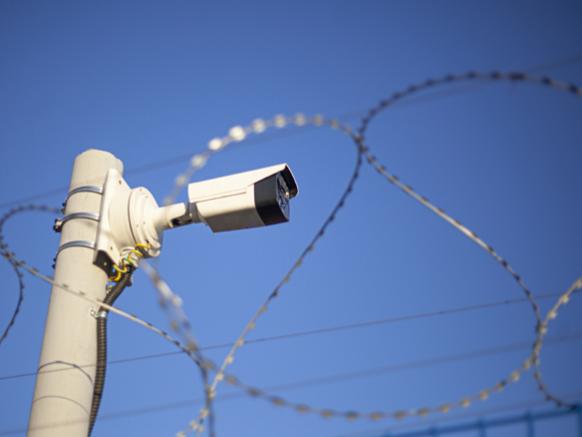
Barrier-mounted Perimeter Intrusion Detection Systems are mounted directly to physical boundaries including walls, fences and palisades, providing early warning to breaches by detecting vibrations, cutting or climbing. They are deployed either directly on or in conjunction with a fence or another type of physical barrier and typically consist of continuous sensor cables and processing units or as electric fences that provide a deterrent.
A key strength of barrier-mounted PIDS is that the physical barrier provides a delay to breaches, aiding in alarm verification and response time. They can often protect an entire perimeter with a single continuous cable and processing unit, offering infrastructure cost benefits. Electrified fences in particular offer a high deterrence factor and low false alarm rates.
There are some key weaknesses, however. While a single continuous cable and processing unit can be cost effective, it is a potential single point of failure, so redundancy is worth considering. Meanwhile, environmental factors such as high winds, high humidity, or conductive material build-up (like salt in coastal areas) can result in false alarms.
A key factor in deciding if a barrier-mounted PIDS is the right solution is the length of the barrier itself. Because the processing unit can be expensive, this may not be cost-effective for short perimeters. Care must also be taken to match detection zones with camera views to help provide operators with clear situational awareness, and electrified fences should ideally be mounted behind the secured side of the host fence.
Ground-Based PIDS
Ground based PIDS provide a more hidden, early-warning system that alerts security staff to unauthorised access before a physical barrier is breached. These ground-based systems typically use Radio Frequency (RF) radiating fields, microphonic cables, optical-fibre cables, and balanced fluid-filled tubes that work as pressure sensors.
Aside from their more covert nature, ground-based PIDS can be a more appropriate security solution when aesthetics are a priority, as well as providing security awareness in low visibility conditions, such as at night, in the fog or rain, or other conditions where standard video camera surveillance can be ineffective.
Different ground-based PIDS technologies also have their own strengths and weaknesses, for example optical-fibre is immune to RF interference, while RF fields are less affected by weather than above-ground systems.
The key downsides are that they generally suffer from high installation costs and considerable site disruption during installation due to the required groundworks. Performance can also be negatively impacted by ground saturation, heavy rainfall, heavy traffic, or even the pressure of tree roots. Meanwhile, fluid-filled systems tend to have higher maintenance overheads, requiring at least annual pressure checks.
Because they lack a physical barrier, ground-based systems provide no delay or deterrence, meaning a prompt security response to alarms is required and must be factored into other on-site security processes. Consider also that access pits for fluid-filled tubes may compromise the covert nature of the system, and RF radiation can be detected and interfered with by outside parties.
Free-Standing PIDS
Free-standing PIDS are typically active and passive infrared (PIR), bistatic and doppler microwaves, laser scanners, and video analytics units. They are usually deployed above ground without being installed on a physical barrier, ideally placed inside a sterile zone if barrier-mounted systems are unsuitable.
Free-standing PIDS are often cheaper to install than other systems and do not hinder legitimate site activity such as vehicle movement. They are generally reliable too, with video analytics offering a very high detection rate (greater than 95%), and certain microwave/infrared systems have features to reduce false alarms from wildlife.
However, many of these technologies are highly susceptible to weather conditions like fog and rain, which can obscure camera views or cause false alarms. Microwaves can be affected by metallic objects and moving water, and some systems have "dead zones" near the transmitter/receiver units.
Like ground-based systems, free-standing PIDS provide no physical delay or deterrence and as a result, require a rapid response protocol to be effective. Some systems require completely flat ground, since undulations can create dead zones, well-maintained detection areas, and hard-wired synchronisation cables between transmitters and receivers.
Rapidly Deployable PIDS
Rapidly deployable PIDS are designed for temporary deployment, such as securing empty buildings, temporary event sites such as outdoor festivals or public gatherings, or when sites need to be secured at short notice.
Despite their temporary nature, rapidly deployable PIDS use the same detection technologies as permanently deployed PIDS, but are generally battery-powered and transmit alarm data wirelessly.
Their key strengths are extreme portability, enabling flexible use across various locations without the need for permanent infrastructure. Commissioning and setup times are significantly reduced compared with permanent installations, helpful for sites where the threat level has rapidly escalated and greater protection is needed.
However, their reliance on battery power can result in unexpected downtime or frequent recharging, which can impact operations. Furthermore, their wireless communication schemes are generally less secure than the hard-wired connections used in permanent setups.
As a result, they are best suited for temporary use only and should be paired with a physical barrier for perimeter security applications. Because they are deployed rapidly, careful alignment of sensors and camera views is required. Rushing this process can result in lower performance compared to permanent systems.
Overcoming Data Overload through an Integrated Command Platform
Deploying physical sensors solves only half the perimeter puzzle. Control room operators facing hundreds of raw alerts from poorly calibrated sensors quickly succumb to alarm fatigue and cognitive exhaustion.
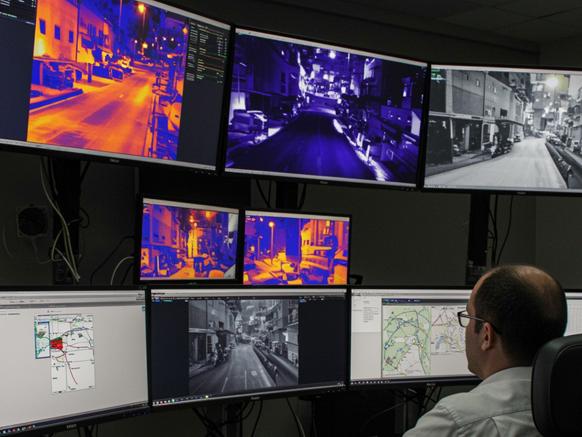
An Intelligent Converged Management System (ICMS) like Genesys acts as a unifying intelligence layer and side-steps these issues. By correlating data across multiple sensor types in real time, the platform filters out environmental noise like high winds or local wildlife before alerts hit the operator screen. When a genuine breach occurs, Genesys can bypass human hesitation by executing dynamic cause-and-effect workflows, driving automated visual verifications and triggering immediate INVAC lockdown sequences. These advanced workflows provide greater situational awareness to operators, crucial for making the right decisions in high-stakes situations.
With integration essential for effective security processes, cyber resilience is non-negotiable. Genesys holds CAPSS approval, the benchmark security standard evaluated by the National Protective Security Authority (NPSA). This government stamp of approval gives CNI operators verified protection, ensuring physical security software never becomes an entry point for cyber-physical attacks.
The Pitfall of Relying on VMS for Perimeter Intrusion Detection
A common mistake in security specification is attempting to force a Video Management System (VMS) to act as the primary perimeter command platform. While modern VMS platforms handle video streams expertly, they lack the complex logic engines required to correlate multi-layered PIDS inputs or drive complex security workflows.
Relying on a video-centric platform for perimeter defense often leads to unmanageable nuisance alarm rates, isolated sensor data, and eventual operational failure. Resolving these issues later typically requires expensive system retrofits or project rescues.
As a purpose-built Intelligent Converged Management System, Genesys integrates disparate security systems together onto a single screen and supports automated workflows across different security devices from over 80 industry leading technology vendors.
Mitigating Legacy Infrastructure Vulnerabilities without Total Hardware Replacement
Estate Managers and Finance Directors often find their capital budgets stretched, needing to balance strict security mandates against limited replacement funds. Replacing every legacy sensor or device across a vast estate is rarely practical or cost-effective.
At ISM we recognise this, which is why the Genesys platform is vendor-agnostic and able to integrate legacy assets into our cutting-edge front-end layer, drawing your existing PIDS devices into a single operational interface. Integrating with more than 80 established physical security brands, the Genesys software modernises your control room, extends the life of functional capital assets, and eliminates single-vendor lock-in.
Future-Proofing your Perimeter Strategy
Selecting the right PIDS hardware is essential, but standalone sensors cannot defend complex facilities in isolation. True security resilience lies in combining physical perimeter detection with cyber-assured command software that turns raw sensor signals into decisive, automated action.
Modern estate protection requires retiring the old split between physical safety and cybersecurity. Choosing a CAPSS-approved platform gives your organisation a government-tested foundation capable of handling evolving physical and cyber-physical threats.
Contact our design team today to audit your current Perimeter Intrusion Detection Systems and discover how to integrate your legacy estate into a unified command layer.