Beyond the Silo: Cyber Physical Security Convergence
In an era where digital and physical infrastructures are inextricably linked, the traditional separation between cyber and physical security has become a liability. Modern operational environments, ranging from critical national infrastructure to corporate data centres, are increasingly vulnerable to multi-vector threats that exploit the gaps between these historically siloed domains.
This article explores the importance of cyber-physical security convergence—a unified defensive posture that integrates physical, operational, and cyber telemetry into a single, cohesive command-and-control ecosystem. By moving beyond isolated security management, organisations can achieve the situational awareness necessary to defend against sophisticated modern threats.
Why physical and cyber security convergence is no longer optional
For decades, an unwritten rule governed security strategy: keep physical access control and digital networks separated, and both remain safe. That operational boundary no longer exists. Modern internet-connected hardware, intelligent IP cameras, and smart access readers have quietly transformed the physical perimeter into an active digital endpoint.
If a malicious actor gains physical contact with an unencrypted IP camera or a remote network switch, your multi-million-pound corporate firewall becomes redundant. Treating physical security as an isolated domain creates an open invitation for network intrusion. Complete operational resilience requires a single, unified defensive posture where physical events and digital threat intelligence inform each other in real time.
Incorporating Operational Requirements
Defining clear Operational Requirements (OR) must always precede specifying security hardware or beginning the technical integration. Instead of defining the security features, the OR defines the conditions, capabilities and environment, outlining how and under what conditions the security solution must operate under.
This is critical for ensuring the converged cyber-physical security solution is fit for purpose and can respond appropriately to the anticipated threats or security risks.
Understanding the cyber-physical risk in Critical National Infrastructure
Critical national infrastructure faces an evolving, multi-vector threat landscape. Modern environments like data centres, transport hubs, and energy grids sit directly where physical security and Operational Technology (OT) collide. Some of the core threats we see include:
Insider threats
Insider threats cover any trusted person on site such as an employee, contractor, or even a delivery driver on site to use their authorised access for unauthorised means. Insider threats aren’t necessarily intentional, as they can arise from negligent or accidental leaking of data such as through phishing scams.
However, intentional insider threats are not unknown, for example disgruntled personnel working alone or teaming up with outside actors to use their physical access privileges to deploy malware or extract sensitive data directly from server rooms.
Operational Technology (OT) Vulnerabilities
Operational Technology vulnerabilities are weaknesses in security hardware or software that can be exploited. For example, a targeted cyber attack on an industrial control network can trigger physical consequences, such as forcing an automated facility lockdown or disabling emergency backup generators.
Legacy Hardware Liabilities
Legacy hardware can represent a significant security threat, particularly where early networked devices do not support modern encryption protocols, secure authentication, firmware updates, or contemporary security standards. Such equipment may contain known vulnerabilities that cannot be remediated because the manufacturer no longer provides patches or the hardware cannot support updated security controls.
In a converged cyber-physical environment, compromised legacy devices such as CCTV cameras, access-control systems, alarm panels, intercoms and building-management equipment could provide an entry point into wider organisational networks or enable attackers to manipulate physical security functions. The continued use of unsupported hardware therefore increases the attack surface, creates potential vulnerabilities at the interface between cyber and physical systems, and can make it difficult to maintain consistent security controls across the environment.
Modern perimeter threats
New technologies mean perimeter threats are ever changing, for example managing drone intrusion, sterile/non-sterile zones, as well as non-traditional OT endpoints such as Building Management Systems (BMS), HVAC, and fire control systems alongside traditional access control/IP cameras.
Architecting a converged security strategy around CAPSS Approval
Bringing physical security systems under robust IT compliance requires a proven framework. ISM’s Genesys software carries CAPSS (Cyber Assurance of Physical Security Systems) approval—a rigorous standard developed jointly by the NCSC and NPSA. CAPSS offers true cyber assurance for electronic security software that might otherwise present an easy target for sophisticated digital attacks.
Achieving this level of architectural security relies on strict operational controls:
- Strict Cryptographic Port Management: Deactivating unused physical ports on local workstations and network edge devices to prevent unauthorised hardware drop-boxes.
- Granular Multi-Layered Access: Replacing standard proximity credentials with multi-factor biometric validation at critical internal boundaries.
- Comprehensive Continuous Monitoring: Logging every hardware node interaction into a centralised, immutable audit trail.
- Isolated Test Environments (Sandbox): Penetration tests, vulnerability scans, and data simulations run safely on a mirrored staging network decoupled from live operations.
- Interface Normalisation & API Bounding: Normalising incoming data feeds from sub-systems like CCTV, access control, and perimeter detection without exposing underlying host controllers to malformed payloads.
- Role-Based Access Control (RBAC) Enforcement: Restricting test privileges strictly to authorised assessment personnel to eliminate configuration drift or the accidental disabling of safety macros.
- Comprehensive Audit Logging: Capturing manual commands, automated cause-and-effect responses, and operator interactions live to ensure audit trails hold up under stress.
- Fail-Safe Override Protocols: Maintaining active, testable manual overrides for physical lockdowns without endangering facility safety during active network disruption tests.
The power of a single pane of glass
Standard Video Management Systems (VMS) were built to manage video feeds. Relying on video-centric architecture or basic Access Control Systems (ACS) for complex cyber-physical convergence can leave your operations exposed.
While many VMS platforms on the market claim to integrate signals from other security systems, this usually in the form of third-party plugins instead of native integrations and crucially, without true command-and-control logic.The resulting integration gaps tend to lead to failed deployments, or at worst, expensive project rescue or rework.
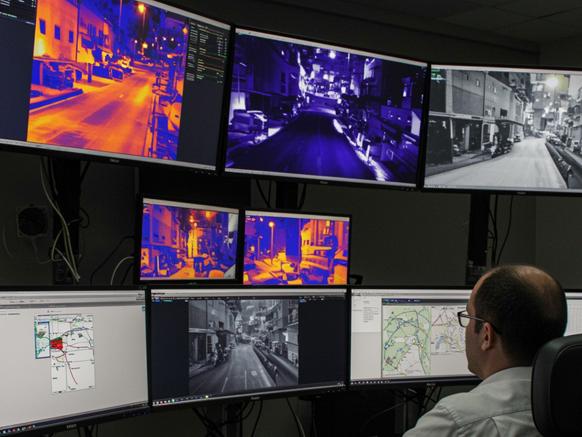
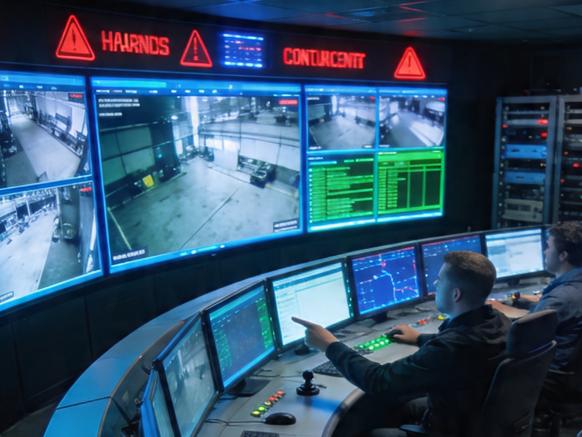
By contrast, an Intelligent Converged Management System (ICMS) functions as a complete command and control ecosystem. ISM’s Genesys platform correlates data across previously siloed sub-systems, bringing physical, operational, and cyber telemetry into a single pane of glass and true integration.
For example, if an employee scans an access card at an internal gate when no shift is scheduled, Genesys immediately cross-references the event with network access logs, catching potential insider threats in seconds. The result? Complete situational awareness across your entire enterprise.
Conclusion
The evolution of the threat landscape in critical national infrastructure has made the traditional separation between cyber and physical security a significant liability. Modern environments can no longer rely on siloed defensive strategies that ignore the digital vulnerabilities of physical endpoints. Effective convergence requires a proactive, unified strategy that begins with clearly defined operational requirements and integrates robust, verified frameworks such as CAPSS to ensure long-term architectural integrity.
To achieve true, real-time situational awareness and operational resilience, organisations must transition toward advanced platforms like the Intelligent Converged Management System (ICMS). By correlating telemetry from across the entire security ecosystem into a single pane of glass, these systems provide the comprehensive visibility needed to detect and mitigate complex risks. Embracing this converged approach is a fundamental necessity for securing critical infrastructure against the sophisticated, multi-vector threats of the modern age.
Ready to see what an ICMS can do for your organisation? Discover the power of Genesys by ISM Get in touch with ISM.